








People Make GenAI Work

Mette Gaba
Head of GenAI Journey & Enablement
GenAI does not create value on its own. People do. Join Mette Gaba from Danske Bank and explore how skills, collaboration, and leadership across individuals, teams, and organisations determine whether GenAI becomes a real capability.

GenAI does not create value on its own. People do. Join Mette Gaba from Danske Bank and explore how skills, collaboration, and leadership across individuals, teams, and organisations determine whether GenAI becomes a real capability.
Subscribe to watch
Access this and all of the content on our platform by signing up for a 7-day free trial.
People Make GenAI Work
5 mins 42 secs
Key learning objectives:
Understand how GenAI capability is built across individuals, teams, and the organisation
Explain how cross-functional collaboration enables practical GenAI solutions
Evaluate the role of leadership in enabling alignment, learning, and safe experimentation
Assess how communication, collaboration, and capability drive successful adoption
Overview:
Communication, collaboration, and capability are the core drivers that determine whether GenAI becomes embedded in everyday work or remains isolated in pilots.
Subscribe to watch
Access this and all of the content on our platform by signing up for a 7-day free trial.
GenAI does not create value on its own. It becomes valuable only when people understand how to use it, trust it, and integrate it into their work. This requires changes in behaviour, not just the introduction of new tools. Without adoption at the human level, GenAI remains experimental and disconnected from real business impact.
Individuals need more than basic tool awareness. Prompt literacy enables them to interact effectively with GenAI systems, while integration skills help them apply outputs within real workflows. A growth mindset is equally important, as it allows individuals to experiment, learn from mistakes, and continuously improve how they use the technology in practice.
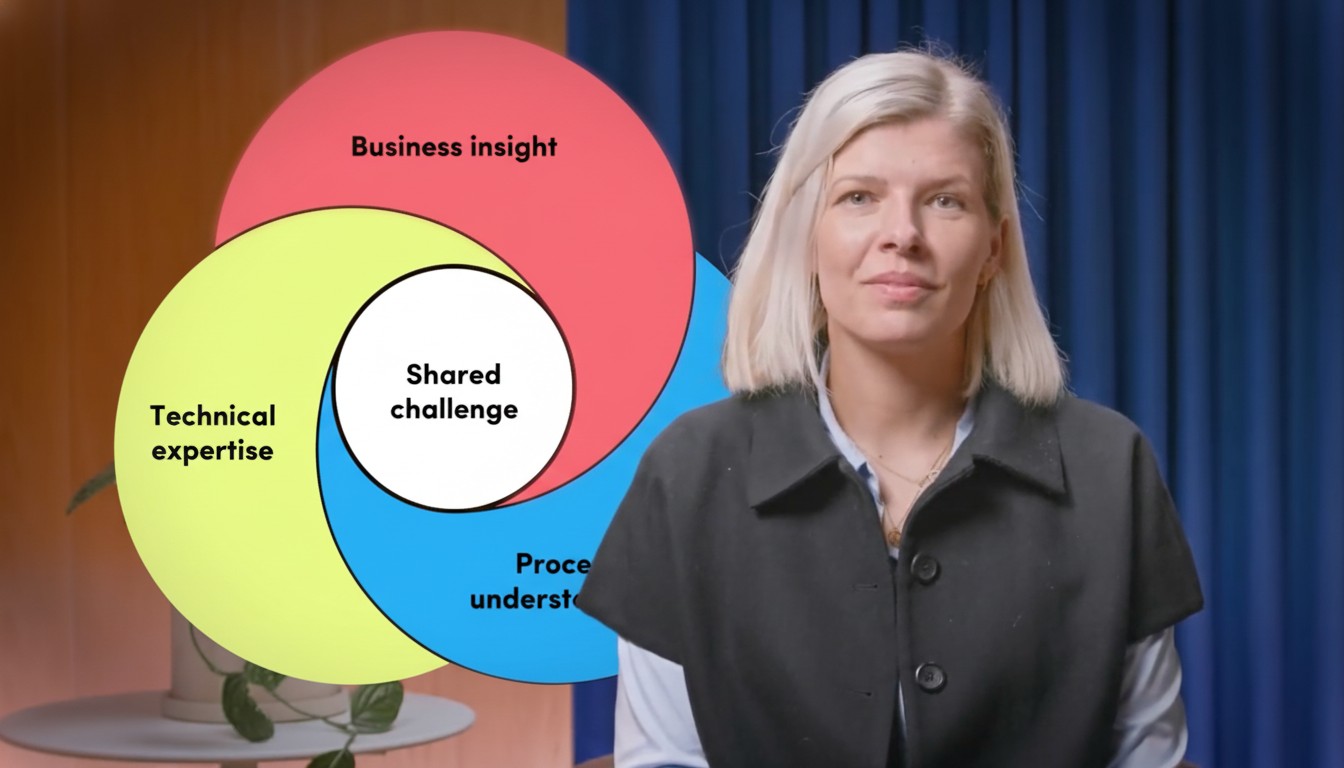
Value emerges when teams work across functions to solve shared problems. Bringing together business insight, technical expertise, and process understanding ensures that solutions are both practical and relevant. Without this collaboration, ideas often remain theoretical or fail to integrate into day-to-day operations.
Rapid prototyping enables teams to move from ideas to tangible outputs quickly. By testing, learning, and refining in short cycles, teams build confidence and uncover what works in real conditions. This approach reduces risk and accelerates learning, making it easier to move from concept to implementation.
Organisations need the right structures and environment to support adoption. This includes governance that provides clear boundaries, processes that enable scaling, and tools that integrate seamlessly into workflows. Just as important is a culture that encourages responsible experimentation and continuous learning.
Leaders play a key role in setting direction and creating the conditions for success. They provide clarity, remove barriers, and ensure that teams feel supported in experimenting and learning. Without active leadership, initiatives often lose momentum or fail to scale beyond early stages.
Successful adoption is shaped by three core elements. Communication builds understanding and reduces uncertainty. Collaboration brings together the perspectives needed to solve real problems. Capability ensures that people have the skills and confidence to use GenAI effectively. When these come together, GenAI becomes embedded in how work gets done.
Subscribe to watch
Access this and all of the content on our platform by signing up for a 7-day free trial.

Mette Gaba
There are no available Videos from "Mette Gaba"