




Plans & Membership

Our Platform

Expert-led content

100's of expert presented, on-demand video modules

Learning analytics

Keep track of learning progress with our comprehensive data

Interactive learning

Engage with our video hotspots and knowledge check-ins

Testing and certifications

Gain CPD / CPE credits and professional certification

Managed learning

Build, scale and manage your organisation’s learning

Integrations

Connect Data Unlocked to your current platform

Featured Content

Featured Content

Implementing AI in your Organisation

In this video, Elizabeth explains how organisations can successfully adopt AI and data science by fostering a data-driven culture and strategically implementing AI projects.

Blockchain and Smart Contracts

In the first video of this video series, James explains the concept of blockchain along with its benefits.

Featured Content

Ready to get started?

Plans & Membership

Our Platform

Expert-led content

100's of expert presented, on-demand video modules

Learning analytics

Keep track of learning progress with our comprehensive data

Interactive learning

Engage with our video hotspots and knowledge check-ins

Testing and certifications

Gain CPD / CPE credits and professional certification

Managed learning

Build, scale and manage your organisation’s learning

Integrations

Connect Data Unlocked to your current platform

Featured Content

Featured Content

Implementing AI in your Organisation

In this video, Elizabeth explains how organisations can successfully adopt AI and data science by fostering a data-driven culture and strategically implementing AI projects.

Blockchain and Smart Contracts

In the first video of this video series, James explains the concept of blockchain along with its benefits.

Featured Content

Ready to get started?

Ready to get started?

The Art of Prompt Engineering

The Art of Prompt Engineering

Maurice Tony Ewing

AI Transformation Consultant

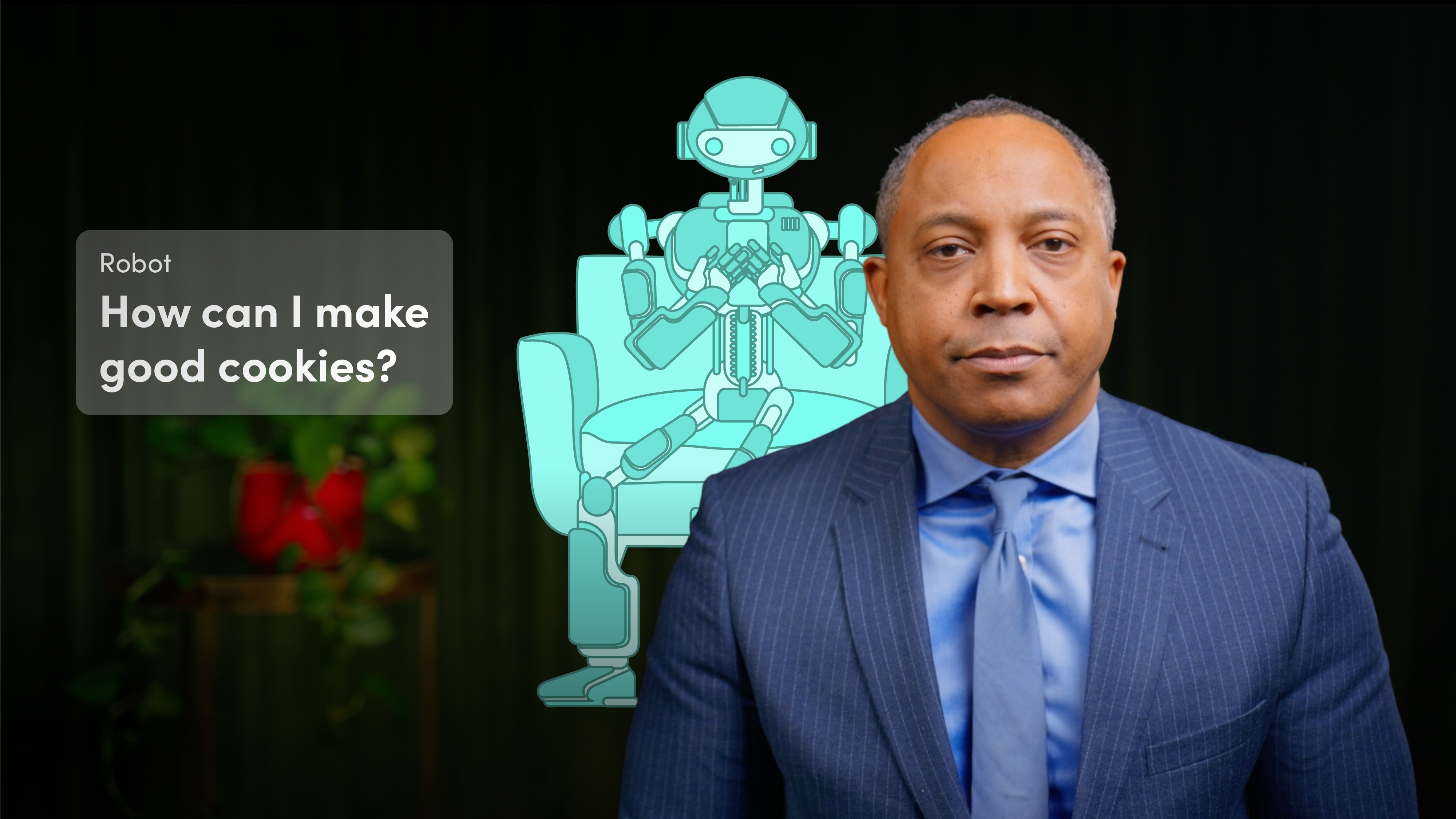
In this video, Maurice dives into the art of prompt engineering, the key to getting AI to generate useful, accurate responses. He breaks down how to craft clear, structured, and well-defined prompts to improve AI-generated outputs while minimising errors and inefficiencies. He also explains the three core principles of effective prompting: clarity, control, and leveraging AI’s strengths.

In this video, Maurice dives into the art of prompt engineering, the key to getting AI to generate useful, accurate responses. He breaks down how to craft clear, structured, and well-defined prompts to improve AI-generated outputs while minimising errors and inefficiencies. He also explains the three core principles of effective prompting: clarity, control, and leveraging AI’s strengths.

Subscribe to watch

Access this and all of the content on our platform by signing up for a 7-day free trial.

The Art of Prompt Engineering

18 mins 54 secs

Key learning objectives:

  • Understand the importance of prompt engineering in guiding AI responses effectively

  • Understand how to craft clear, structured, and well-defined prompts to improve AI-generated outputs

  • Outline the importance of control and iteration in refining AI interactions

  • Understand the importance of leveraging AI’s strengths by experimenting with formats, utilising data, and encouraging creativity

Overview:

Prompt engineering is the key to getting AI to generate useful, accurate responses. Because AI relies on vast but imperfect data, crafting precise prompts ensures better results. Good prompts balance specificity and breadth - too vague, and AI struggles to generate relevant information; too specific, and it may hallucinate responses. Effective prompt engineering follows three principles: clarity (be specific and provide examples), control (set constraints, iterate, and use direct instructions), and leveraging AI’s strengths (experiment with formats, tap into data, and encourage creativity). By mastering these techniques, users can optimise AI’s potential while minimising errors and inefficiencies.

Subscribe to watch

Access this and all of the content on our platform by signing up for a 7-day free trial.

Summary
What is prompt engineering, and why is it important?

Prompt engineering is the practice of structuring inputs to AI systems to achieve useful and relevant responses. Since AI generates novel outputs based on training data, poorly framed prompts can lead to vague, misleading, or incorrect responses. Thoughtfully designed prompts ensure AI remains within relevant data boundaries, reducing errors and improving efficiency. This skill is essential for anyone working with AI, as effective communication leads to better outcomes.

How does AI’s ability to generate responses impact the accuracy of information?

AI models rely on large datasets but do not inherently understand truth or context like humans. They generate responses probabilistically, which means they may fabricate details, known as hallucinations, when data is insufficient. If a prompt is too vague, AI struggles to find the right information, while overly specific prompts might push it toward unreliable data. Users must balance specificity with flexibility to ensure accurate outputs.

What are the key principles of crafting effective prompts?

Good prompt engineering follows three core principles:

  • Clarity: A well-structured prompt should be specific and provide enough context to guide the AI effectively. Instead of asking vague questions like “How can I make good cookies?”, a more precise prompt like “Provide a recipe for soft-baked chocolate chip cookies using whole wheat flour and honey instead of sugar” helps the AI generate a relevant and useful response. Clarity also involves stating the intended audience and expected format.

  • Control: AI responses can be unpredictable, so setting constraints ensures the output remains focused. Users should specify length (“Summarise in under 200 words”), tone (“Write in a professional style”), or formatting (“Provide the response in a table”). Iteration is also key, refining prompts over multiple attempts improves accuracy. Using direct instructions (“List three ways to improve employee retention” rather than “How do companies retain employees?”) helps eliminate ambiguity.

  • Leverage AI’s strengths: AI excels at data analysis, structured outputs, and creativity. Users can take advantage of these strengths by requesting different formats, such as tables or charts, rather than just text. For example, “Compare Agile and Waterfall methodologies in a side-by-side table” produces a more useful response than a generic comparison request. AI can also generate new ideas, “Suggest three cost-cutting strategies for an office renovation that maintains quality” encourages AI to think critically and provide unique insights.

How can users refine AI interactions to achieve better results?

Refining AI interactions requires continuous iteration and adjustment. Users should structure prompts clearly, adding parameters such as length limits or required outputs. By testing variations of prompts and analysing responses, they can fine-tune AI-generated results. Additionally, focusing on task-oriented queries and using direct commands improves efficiency. A systematic approach to prompt refinement ensures AI remains a valuable tool rather than a source of confusion.

Subscribe to watch

Access this and all of the content on our platform by signing up for a 7-day free trial.

Maurice Tony Ewing

Maurice Tony Ewing

Maurice Tony Ewing is a seasoned professional in training, consulting, and executive coaching, having advised and trained thousands of executives and managers across over 60 countries. With a background in banking and board membership, Maurice runs his own consulting firm, Conquer Risk, and teaches data analytics at Columbia University. His most notable accomplishment is leading the data science team that created the world's first mobile-lending platform, which was crucial in Google's creation of "Bebapay" and the NFC payment and lending process. Since then, Maurice has helped companies launch digital initiatives and build strategic, governance, risk, and compliance frameworks. He aims to bring his practical experience and technical knowledge to these learning streams to assist others in learning.

There are no available Videos from "Maurice Tony Ewing"